Discover ACoP 2026 research comparing Aplos NCA, Phoenix WinNonlin, and PKNCA for PK accuracy, analysis speed, and large-dataset performance.
New comparative research demonstrates how Aplos NCA delivers consistent pharmacokinetic results with significantly faster analysis runtimes than traditional desktop and R-based solutions.
How much time could pharmacokinetic scientists save if their NCA software delivered the same reliable results in a fraction of the time?
At the 2026 American Conference on Pharmacometrics (ACoP) in Washington, DC, Nathan Teuscher, Founder and President of Aplos Analytics, presented research addressing this question.
The poster, “Comparison of Non-Compartmental Analysis Results and Time for Analysis Using Aplos NCA, PKNCA, and Phoenix WinNonlin,” co-authored with Carlos A. Rodríguez of PharmaPolaris International, examined three widely used NCA solutions, comparing numerical agreement, analysis runtime, and performance as dataset sizes increased.
The findings demonstrate an important advantage for pharmacokinetic teams: Aplos NCA delivers virtually identical key PK parameters while significantly reducing the time required to complete analyses.
Comparing Accuracy, Speed, and Scalability
Non-compartmental analysis is a fundamental component of pharmacokinetic evaluation in both nonclinical and clinical drug development.
While multiple commercial and open-source solutions are available, differences in software implementation, usability, and computational performance can influence how efficiently scientists complete their work.
The study compared three platforms:
- Aplos NCA: A cloud-native, software-as-a-service solution.
- Phoenix WinNonlin: A widely used desktop-based PK analysis application.
- PKNCA: An open-source R package for non-compartmental analysis.
Researchers evaluated six simulated scenarios including both single-dose and steady-state dosing covering extravascular, intravenous bolus, and intravenous infusion administration.
Each scenario included 24 profiles with 12 observations per profile, including below-the-limit-of-quantification (BLQ) and missing samples. An additional dataset containing 3,000 profiles was used to evaluate performance at scale.
The study measured both the accuracy of parameter calculations and the time required to perform the analysis, which included the complete analysis workflow, from importing analysis-ready data to exporting calculated PK parameters. This included the necessary setup and configuration steps for each application, providing a practical comparison of the time required to complete an analysis.
Consistent PK Results, With Important Differences in Precision
Accuracy is essential in pharmacokinetic analysis. Faster calculations only provide meaningful value when scientists can rely on the results.
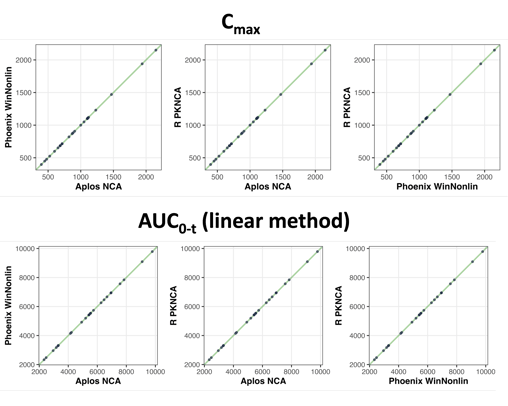
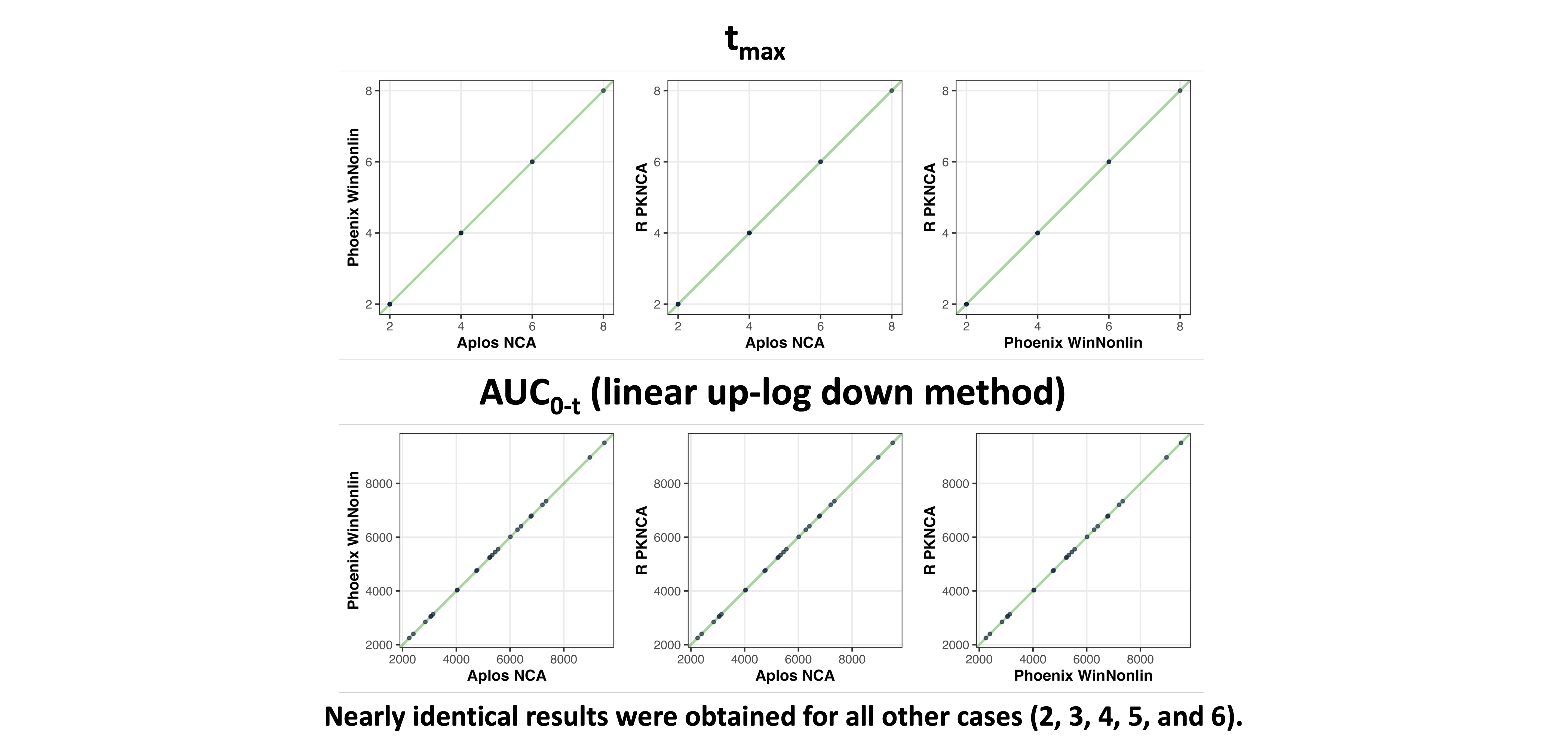
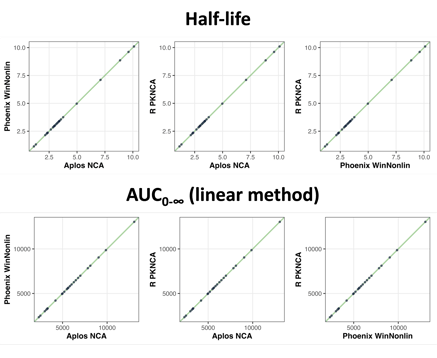
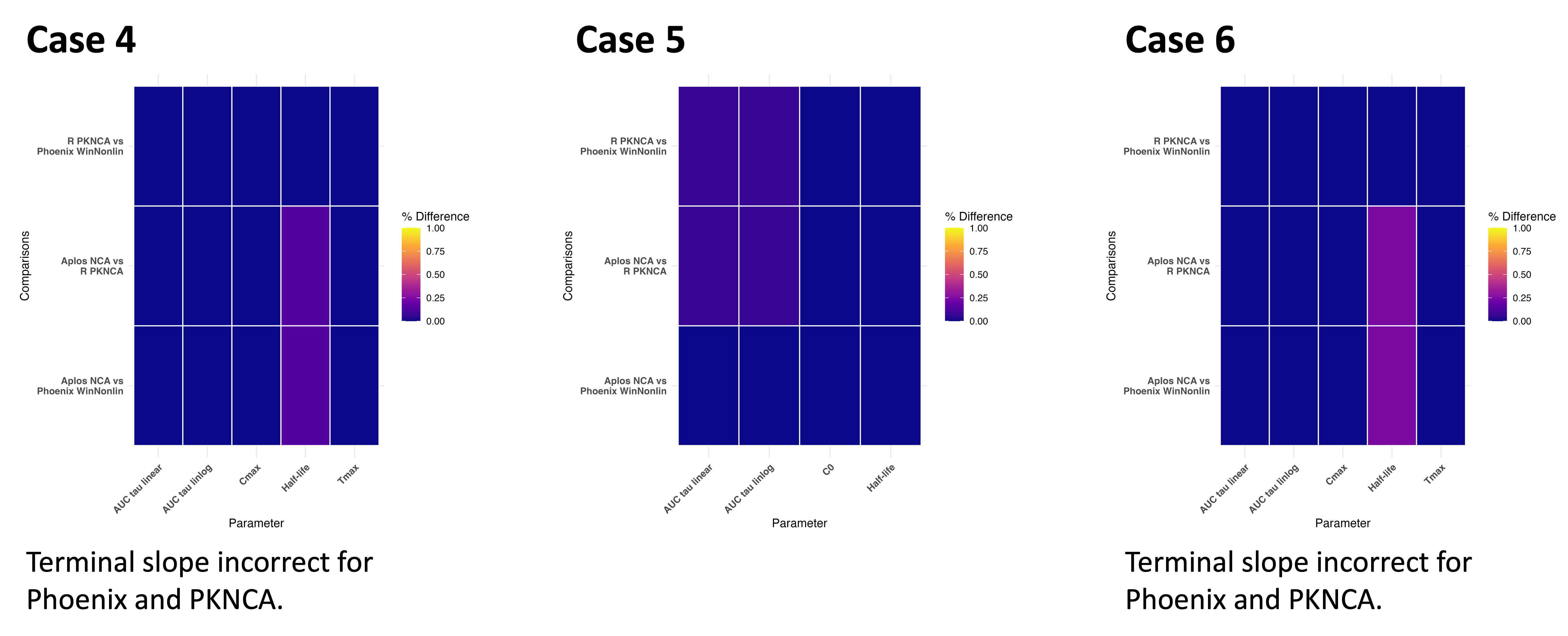
Across all six study scenarios, Aplos NCA, Phoenix WinNonlin, and PKNCA produced virtually identical key pharmacokinetic parameters, including Cmax, Tmax, half-life, and AUC measurements.
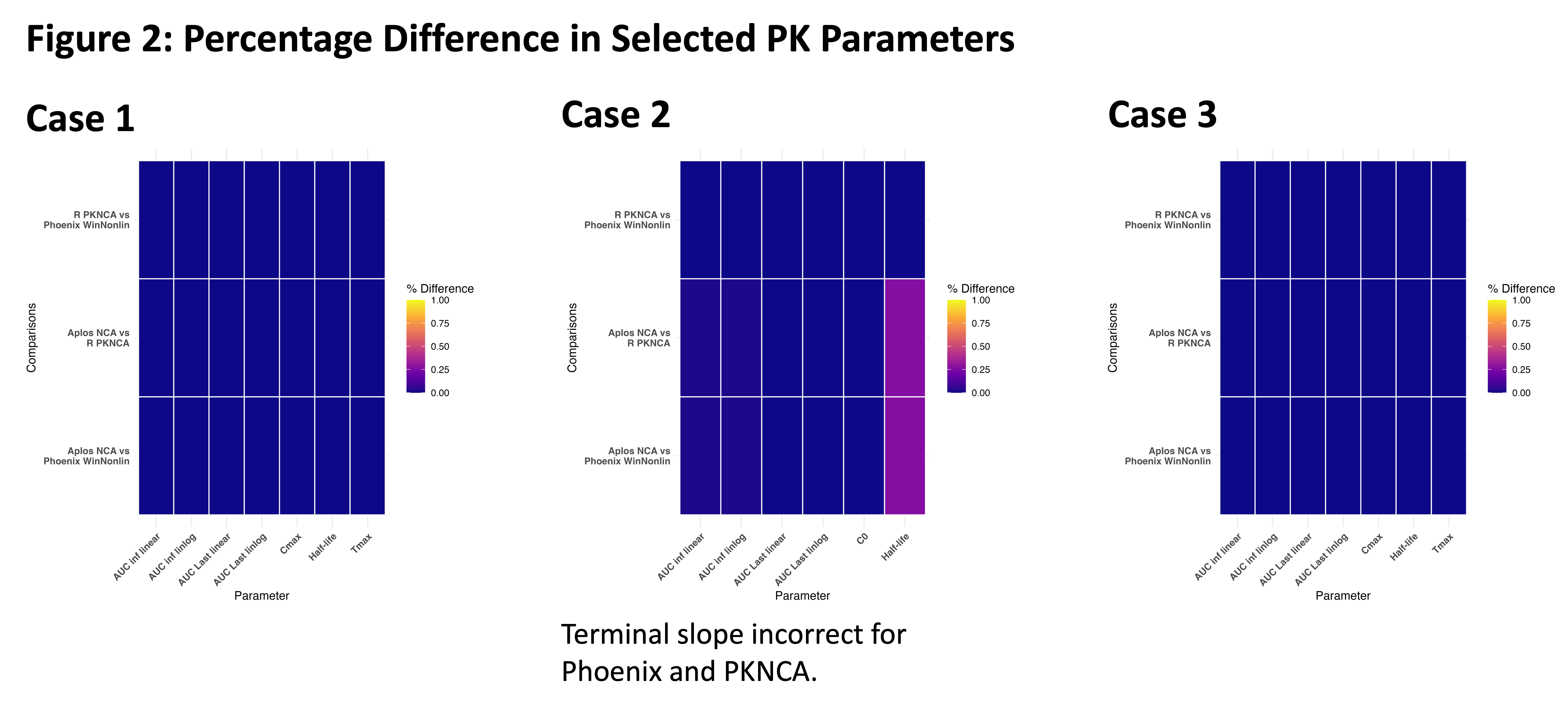
However, the comparison also identified differences in how the applications selected the best-fit terminal elimination slope.
Phoenix WinNonlin and PKNCA rounded adjusted R² values before comparing candidate slopes. In certain cases, this resulted in the selection of a slope that did not have the highest unrounded adjusted R² value.
Aplos NCA does not round adjusted R² values before making this comparison, allowing it to select the terminal slope with the highest calculated adjusted R² value.
This distinction illustrates why seemingly small implementation details matter when evaluating pharmacokinetic software.
For scientists, the objective is not simply to generate results quickly, but to maintain confidence in the calculations and methodologies supporting their analyses.
Significantly Faster Analysis Runtimes
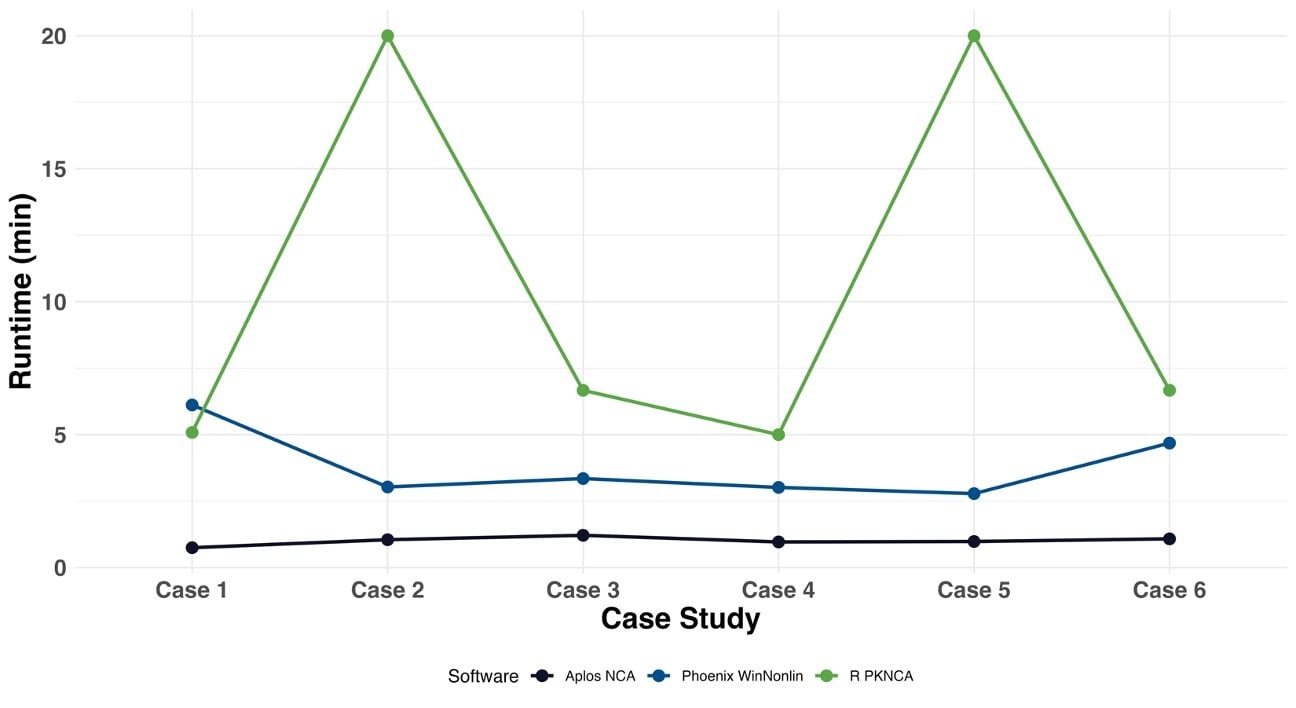
One of the clearest findings presented at ACoP 2026 was the difference in analysis time between the three solutions.
Across the six study scenarios, Aplos NCA completed analyses significantly faster than both Phoenix WinNonlin and R-based PKNCA workflows.
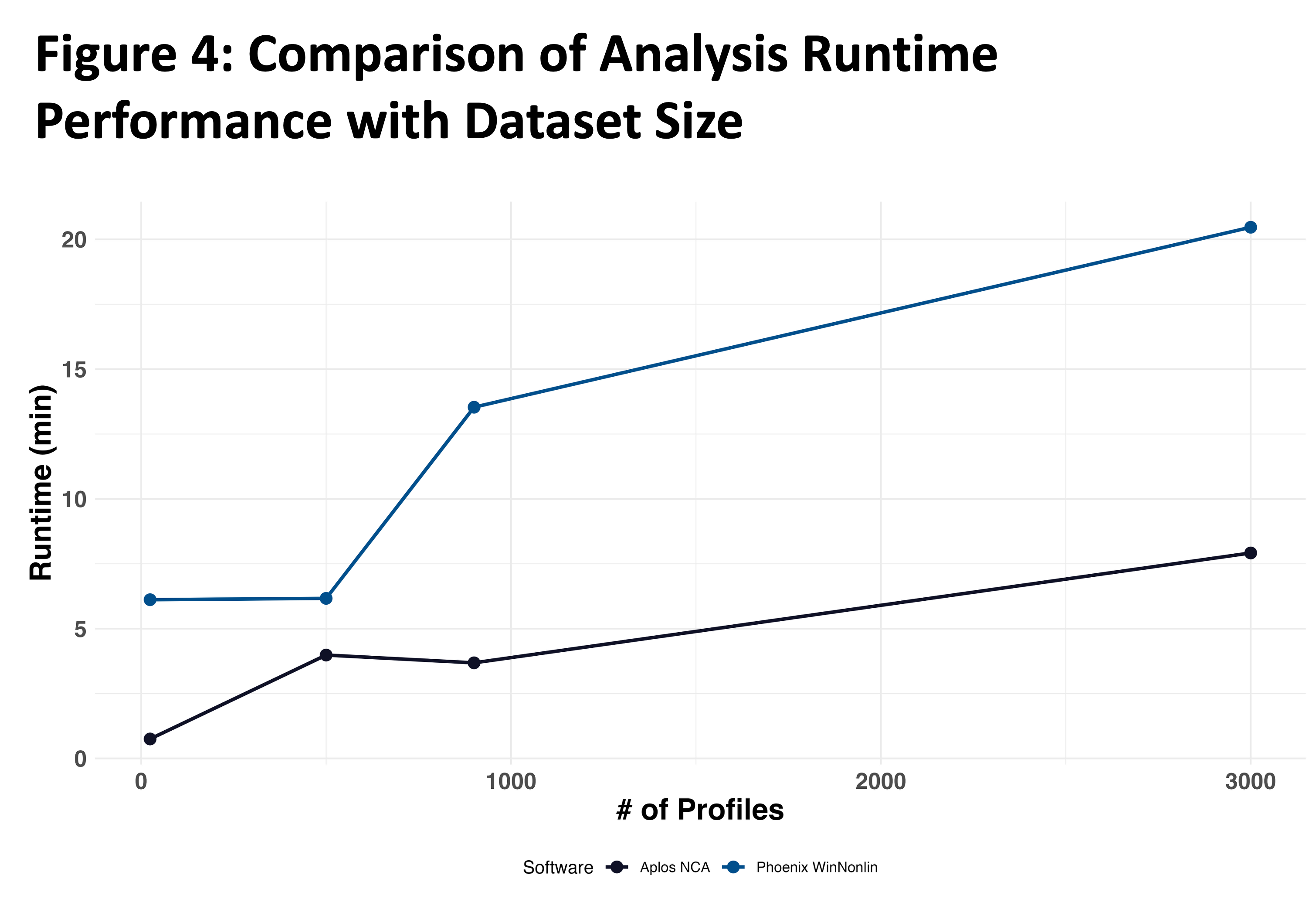
This advantage was also demonstrated when working with larger datasets.
In the additional performance test involving 3,000 pharmacokinetic profiles, Aplos NCA was significantly faster than Phoenix WinNonlin.
These findings are particularly relevant as pharmacokinetic teams manage increasingly complex studies and larger volumes of data.
Reducing analysis runtime can have implications beyond the execution of individual calculations. It can help teams:
- Reduce time spent on repetitive analysis and configuration tasks.
- Process larger datasets more efficiently.
- Shorten the time between receiving concentration data and obtaining PK results.
- Free scientists to focus more on interpreting results and supporting scientific decisions.
For laboratory and pharmacometrics leaders, these efficiencies represent an opportunity to improve team productivity without requiring additional analytical resources.
The value is not simply completing an analysis faster. It is giving scientists more time to focus on the work that requires their expertise.
Beyond Faster NCA: The Opportunity for AI-Driven Automation
Beyond the poster findings, one of the prominent themes at ACoP 2026 was the growing interest in using artificial intelligence to accelerate scientific analyses and automate repetitive tasks.
As Nathan Teuscher observed following the conference:
"The buzz at the meeting was leveraging AI solutions to accelerate analyses and streamline repetitive work."
This discussion is particularly relevant to how modern pharmacokinetic software is designed.
Aplos NCA is cloud-native and provides direct API access, allowing analysis workflows to be integrated with other applications and automated processes.
Rather than relying exclusively on manual interaction with desktop software, organizations can use programmatic interfaces to submit analyses and retrieve results.
The AplosNCA R package provides another way for scientists to access the platform's capabilities within existing R workflows.
These capabilities establish a foundation for AI-enabled workflow orchestration, where AI tools could help coordinate repetitive analytical steps through supported APIs while scientists retain responsibility for reviewing and interpreting results.
Aplos NCA is not positioned as an AI system itself. Its architecture makes it suitable for integration into automated and potentially AI-assisted analytical workflows.
This distinction is important. AI may change how scientists interact with software, but reliable, validated analytical calculations remain essential.
The performance results presented at ACoP demonstrate the value of efficient NCA execution today, while the platform's API-driven architecture supports further opportunities for workflow automation.
What These Findings Mean for Pharmacokinetic Teams
The research presented at ACoP 2026 highlights three considerations for organizations evaluating their NCA workflows.
For scientists: Less time processing, more time interpreting.
Consistent PK calculations combined with faster execution can reduce time spent preparing, running, and repeating analyses, allowing scientists to dedicate more attention to understanding the results.
For laboratory and pharmacometrics leaders: Greater analytical efficiency.
Reducing the time required to complete routine NCA workflows can help teams manage growing workloads, improve productivity, and make more effective use of specialized scientific expertise.
For IT and technology teams: An architecture designed for integration.
A cloud-native platform with direct API access offers opportunities to connect analytical workflows with other applications and reduce dependence on manually operated desktop processes.
Together, these capabilities support a more efficient and scalable approach to pharmacokinetic analysis.
Advancing PK Analysis Through Speed, Accuracy, and Automation
The discussions at ACoP 2026 reinforced an important direction for pharmacometrics: organizations are looking for ways to accelerate analysis without sacrificing scientific reliability.
The comparative research presented by Nathan Teuscher and Carlos A. Rodríguez provides evidence that Aplos NCA can deliver both numerical consistency and significant workflow efficiency improvements compared with established NCA solutions.
And as interest in AI-assisted scientific workflows continues to grow, the ability to integrate analytical software through APIs becomes increasingly relevant.
At Aplos Analytics, our focus remains on providing scientists with accurate, efficient, and accessible pharmacokinetic analysis tools that support the way modern teams work.
Explore the research and see what faster, more connected PK analysis could mean for your team.
Contact us: info@aplosanalytics.com